
Key Highlights
- Slitting machines are essential in the converting industry and various manufacturing processes.
- The primary slitting process involves cutting a large roll of material into multiple narrower rolls.
- Different types of slitting, including razor, shear, and crush cut, accommodate a wide range of materials.
- These versatile machines can process everything from delicate plastic films to robust metal coils.
- Key applications are found in flexible packaging, automotive parts, textiles, and electronics.
- Modern machinery offers high-speed operation and precision, making the process ideal for mass production.
Introduction
Have you ever wondered how large rolls of paper or plastic film are transformed into the everyday products you use? The answer often lies in slitting machines, which are fundamental to modern manufacturing processes. These powerful devices are a cornerstone of the converting industry, responsible for cutting wide master rolls of material into specific, usable widths. From food packaging to adhesive tapes, the precision of slitting machines ensures that materials are perfectly prepared for their next stage in production or final use.
Understanding Slitting Machines and Their Functionality
A slitting machine, also known as a slitter, is a vital piece of equipment designed to cut a large roll of material into narrower strips. Its main purpose is to take a master roll and slice it lengthwise to a desired width. These smaller, narrower rolls are then ready for further use in a variety of manufacturing processes.
This equipment can process an impressive range of materials, including paper, foil, plastic films, and even metal coils. The slitting process is engineered for high precision and speed, making it an efficient and economical solution for mass production. Now, let’s examine the key parts that enable this functionality.
Key Components and Mechanism of Modern Slitting Machines
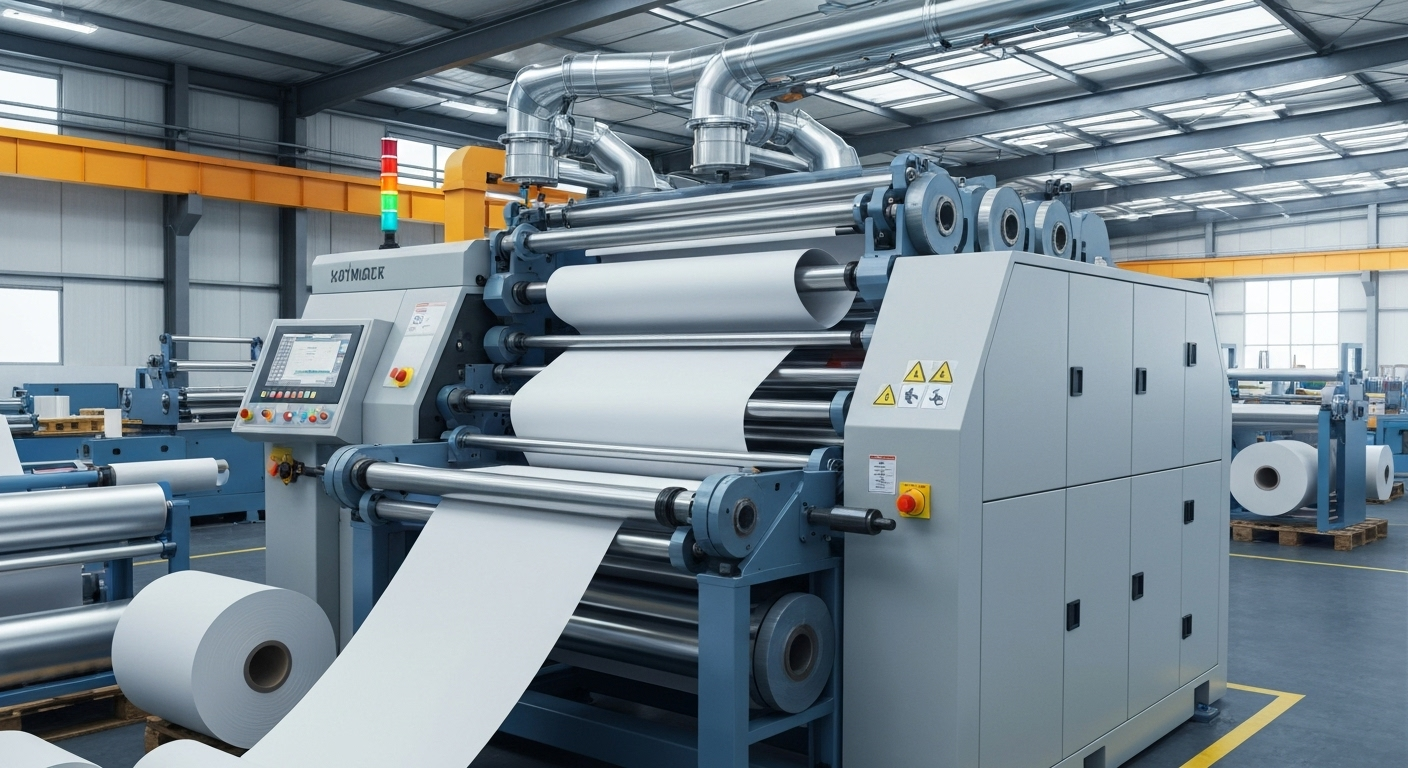
A modern slitting machine generally consists of three main parts: the unwind section, the slitting section, and the rewind section. The operation starts at the unwind section, which holds the large master roll securely. A critical component here is the tension control system, which maintains consistent material tension to prevent wrinkles and ensure the web feeds into the machine smoothly.
From the unwind, the material proceeds to the slitting section, where the actual cutting takes place. This area contains the cutting tools, such as rotary knives, razor blades, or crush cutters. Precision rollers guide the material through the cutters, while advanced AC vector drives manage the speed for accurate and uniform cuts. The knives can be positioned to produce strips of many different widths.
Finally, the newly slit material travels to the rewind section. Here, the narrow strips are wound onto new cores to create finished rolls. This section often uses differential rewind shafts, which allow each new roll to be wound with independent and even tension. This accurate tension control is essential for producing high-quality rolls that are ready for shipment or the next production step.
Materials Processed: Metals, Paper, Plastics, and Beyond
One of the most significant advantages of slitting machines is their capability to handle a wide variety of materials. This adaptability makes them essential across numerous industries. Whether a material is soft and delicate or hard and durable, there is a slitting method and machine configuration designed for its specific properties.
For softer and thin materials, these machines are frequently used to process items like plastic films, paper products, and textiles. These applications demand clean cuts without compromising the material’s structure. Common examples include:
- Adhesive tapes and release liners
- Flexible packaging films such as BOPP
- Non-woven fabrics and other textiles
On the other hand, specialized slitting machines are built to cut harder materials. In metalworking, a form of shearing is used to slice large metal coils into narrower strips for the automotive or construction industries. This process is highly precise, though it can sometimes produce rough edges known as burrs on the slit material.
Popular Types of Slitting Machines in Industry
Within the manufacturing sector, you will encounter several different types of slitting machines, each tailored for specific materials and results. The most prevalent slitting methods are rotary shear, razor, and crush cut. The best method for a particular job depends entirely on the material’s characteristics and the required quality of the finished edge.
These cutting mechanisms are typically part of a larger system called a slitter rewinder. These integrated machines handle the entire process, from unwinding the master roll to slitting it and then rewinding the narrower strips. Let’s take a closer look at these slitting methods and the machines they are part of.
Rotary, Razor, and Shear Slitting Explained
The specific slitting method chosen directly influences the quality and efficiency of the cutting operation. Each technique provides distinct benefits based on the material you need to process. A clear understanding of these methods helps in achieving the best possible results for your application.
The three main slitting techniques are:
- Razor Slitting: This approach uses simple razor blades to slice through the material. It is well-suited for thin materials like plastic films and is very quick to set up. The blades are low-cost but must be changed frequently to ensure a clean cut.
- Shear Slitting: Also called rotary shear slitting, this method uses a pair of circular knives (a top and bottom knife) that function like scissors. It creates a very clean, high-quality cut and is widely used for paper, foils, and films. The cutters stay sharp much longer than razor blades.
- Crush Cut Slitting: With this technique, a dull knife presses the material against a hardened anvil roll, effectively crushing it to create a separation. This works well with materials like foams, rubber, and some non-wovens where other methods are less effective.
Each of these methods offers a unique trade-off between speed, cost, and precision, making the selection critical for meeting production goals.
Differences Between Slitting Machines and Slitter Rewinders
While people often use the terms interchangeably, a technical difference exists between a basic slitting machine and a slitter rewinder. The term “slitting machine” can broadly refer to any device that performs the cutting action. In contrast, a “slitter rewinder” describes the complete, integrated system that manages the entire workflow.
A slitter rewinder is composed of three main parts: an unwind section for the master roll, the slitting section for cutting, and a rewind section for the finished narrower rolls. This all-in-one configuration is the industry standard in most modern converting operations because it provides a seamless and highly controlled process from start to finish.
The rewind section is especially important for creating high-quality finished products. It often incorporates advanced features like differential rewind shafts. These specialized shafts ensure each slit strip is wound with perfectly uniform tension, compensating for any minor variations in material thickness. This technology prevents common defects and ensures the final rolls meet exact specifications.
Industry-Specific Applications in the United States
Across the United States, slitting machines are fundamental to countless manufacturing processes in a wide array of sectors. The converting industry, which specializes in printing, coating, and laminating materials, depends heavily on this technology to create products such as flexible packaging. You will find these machines at the core of many production lines.
Beyond packaging, their use extends into the automotive, electrical, printing, textiles, and metalworking industries. In every sector, slitting provides the essential step of resizing large, economical rolls of material into the precise widths required for specific components and finished goods. We will now explore some of these applications in more detail.
Slitting in Packaging, Automotive, and Electrical Sectors
In the packaging industry, slitting machines are truly indispensable. They are used to cut large rolls of materials like biaxially orientated polypropylene (BOPP) for flexible packaging that protects food products. After these wide rolls are printed and coated, they are slit into smaller sizes that are ready for use on high-speed packaging machinery.
The automotive and electrical sectors also rely on precision slitting for many of their components. Adhesive tapes for vehicle interiors and metal coils for electrical parts are just two examples. For these applications, materials must be cut to exact widths to ensure a perfect fit and proper function, making the accuracy of the slitting process vital for quality control.
Here are some common applications in these key industries:
| Industry | Material | Application Example |
|---|---|---|
| Packaging | BOPP, Plastic Films | Creating rolls for food wrappers and flexible packaging. |
| Automotive | Adhesive Tapes, Foils | Sizing tapes for interior assembly and part labels. |
| Electrical | Metal Coils, Foils | Producing narrow strips for wiring and components. |
Roll Slitting in Printing, Textiles, and Metalworking
The term “roll slitting” describes the fundamental shearing operation of cutting a large roll into narrower ones. This technique is central to operations in the printing, textile, and metalworking industries, where master rolls must be processed for further use. For printers, this involves preparing rolls of paper or foil to the exact width required for their presses.
In the textile industry, large rolls of fabric or non-wovens are slit into narrower strips for a host of different products, from clothing parts to industrial filters. The slit material must have clean edges to prevent fraying, making the choice of slitting method very important. Key uses in these sectors include:
- Preparing paper and foil rolls for printing presses.
- Cutting fabrics and non-wovens for manufacturing.
- Sizing sheet metal for fabrication and stamping processes.
In metalworking, roll slitting transforms wide metal coils into strips of a specific width needed to manufacture parts. In all these cases, roll slitting is the crucial first step that converts bulk material into a manageable and usable format.
Conclusion
In conclusion, slitting machines are essential tools that enhance efficiency and precision across a wide range of industries. From packaging to automotive and textiles, their versatile applications speak to their importance in today’s manufacturing processes. Understanding the functionality and types of slitting machines helps businesses choose the right equipment for their specific needs, ensuring optimal performance and productivity. As industries continue to evolve, staying informed about advancements in slitting technology will be crucial. If you’re interested in exploring how slitting machines can improve your operations, get in touch with our experts for a free consultation.
Frequently Asked Questions
Can one slitting machine handle multiple types of materials?
Yes, many modern slitting machines are designed to be versatile enough to handle a wide variety of materials. The key is having the right configurations, such as interchangeable slitting methods (razor, shear, or crush cut), to adapt the machine to different material properties.
What features contribute to precision cutting and efficiency?
Precision and efficiency rely on several key features. An accurate tension control system ensures material stability, while sharp rotary knives produce clean cuts. In the slitting section, automated systems for blade positioning reduce setup times and improve consistency, helping meet exact specifications.
How often should slitting machines be maintained for optimal performance?
Regular maintenance is essential for optimal performance and longevity. This includes daily cleaning, weekly lubrication, and frequent checks of blade sharpness and alignment. Adhering to manufacturer specifications will help you establish a routine that prevents downtime and maintains high-quality output.